
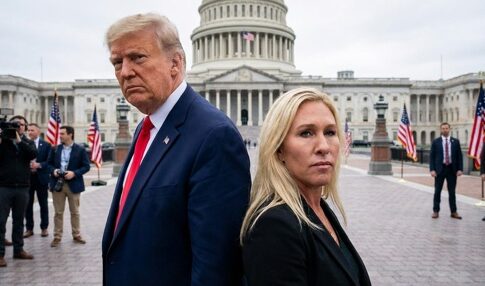
Two old Republican power brokers just sent Donald Trump a quiet but sharp reminder that his grip on the party still runs into walls in the United States Senate.
Story Snapshot
- Senator Mitch McConnell endorsed Trump in 2024 yet backed Trump critic Lisa Murkowski against a Trump-endorsed challenger, exposing a deep split.
- Trump’s endorsements can crush some rivals, but Senate races and leadership fights still run through party insiders like McConnell.
- Senator Lisa Murkowski’s survival in Alaska showed Trump cannot always dictate who speaks for Republicans in the Senate.
- The struggle between Trump’s “loyalty tests” and old-guard Senate power reflects a broader fight over who really runs Washington.
How McConnell’s Trump Endorsement Masks a Deeper Power Struggle
Senate Republican leader Mitch McConnell’s 2024 endorsement of Donald Trump looked like a full surrender, but the timing shows something more complicated. McConnell waited until after Trump’s Super Tuesday wins made him the clear nominee and then declared it “abundantly clear” Trump had the support to lead the ticket.[2] He said Trump “will have my support” as nominee, framing the move as acceptance of Republican voters, not personal devotion. That choice let McConnell keep some control over how the party’s shift toward Trump was presented.[2][3]
Television coverage at the time noted that McConnell and Trump had not spoken in years, even as McConnell moved to back him once victory seemed locked in.[3] That distance matters. It shows McConnell was not acting as Trump’s ally so much as the head of an institution trying to stay relevant. Many Americans who distrust both parties see this as classic Washington: leaders reading the polls, then lining up with whoever looks like a winner. The result is a party that appears united on paper but still badly split under the surface.[2][3]
Murkowski Versus Trump: A Public Rejection of the Loyalty Test
The clash around Alaska senator Lisa Murkowski made that split impossible to hide. After Murkowski voted to convict Trump in his impeachment trial, Trump publicly vowed to remove her and endorsed Kelly Tshibaka, calling Murkowski “bad for Alaska” and saying “Murkowski has got to go.”[1] Trump promised to campaign for Tshibaka and branded her as the “America First” choice, turning a local race into a national test of loyalty. That sent a message to other Senate Republicans who crossed him.[1][6]
McConnell responded in the opposite direction. He made clear that the party campaign arm would back Murkowski’s reelection despite Trump’s attacks.[5] That move undercut Trump’s effort to purge her and signaled that the Senate leadership would still protect its own, even when the base was angry. For many voters on both the right and the left who already suspect the “deep state” protects insiders, this looked like more evidence that senior politicians shield one another from accountability. The fight revealed how far Trump’s influence goes—and where it stops.[1][2][5][6]
Trump’s Endorsement Machine Versus Senate Reality
Across the country, Trump endorsements have changed many Republican primary races, especially in the Senate. A European Parliament briefing found that, in the 2022 midterm elections, Republican candidates backed by Trump often won primaries, proving his strong pull with the party base.[6] That pattern continued in later cycles, where Trump’s support helped fuel challengers to Republicans seen as too close to the old guard. Many conservative voters saw this as a way to punish senators they believed had sold out on issues like immigration and spending.[4][6]
Yet those same studies and reports also note that endorsements are only one part of the story.[4][6] Incumbency, money, and local issues still matter a lot, especially in Senate races that depend on statewide coalitions. McConnell’s long record of steering campaign money and confirming judges shows that institutional power has not simply vanished.[1][3] For frustrated citizens who feel both parties ignore everyday struggles like high prices and weak wages, this tug-of-war can look less like a fight for principle and more like rival factions battling over titles and committee chairs while real problems get worse.
Why These Fights Matter Beyond Party Drama
Behind the drama, there is a bigger question: who actually decides what the Republican Party stands for in the Senate. ABC News described the post-McConnell leadership battle as a “test of Republican loyalty” to Trump, showing how media now frames many internal fights as personal loyalty contests rather than policy debates.[4] That framing can hide the real stakes. These leadership choices shape which bills even get a vote on immigration, spending, energy, and war—issues that hit family budgets and national security every day.[4][6]
For many Americans on both sides, the McConnell–Murkowski–Trump triangle looks like proof that Washington serves itself first. Trump’s backers see a Senate club that protects anti-Trump Republicans even when voters want change. Trump’s critics see a party that falls in line behind a man they believe undermined democratic norms, once it is “abundantly clear” he will win.[2][3][5] In both cases, the message is the same: voters come second, and the real fight is over who runs the machine.
Sources:
[1] Web – McConnell and Murkowski Remind Trump What He’s Up Against
[2] Web – Flashback: How Mitch McConnell Helped Pave the Way for Donald …
[3] Web – McConnell endorses Trump for president. He once blamed … – WHYY
[4] YouTube – McConnell’s lasting legacy and his role in Trump’s domination of the …
[5] Web – Trump vs. McConnell: The final showdown: ANALYSIS – ABC News
[6] Web – Trump endorsement propels Andy Barr to Kentucky Senate primary …