
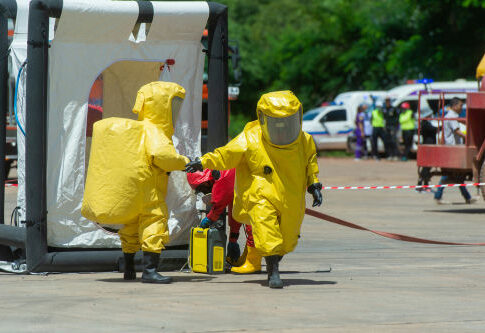
Eleven American workers died after a massive chemical tank imploded and spilled caustic material into the Columbia River—yet weeks later, the cause and accountability remain unanswered.
Story Snapshot
- Investigators confirmed a catastrophic white-liquor tank implosion at Nippon Dynawave in Longview with 11 fatalities [1][2].
- State testing and company data showed high-pH contamination reached the Columbia River [1][3].
- Federal and state probes are underway; officials say findings could take months [2][5].
- Early evidence points to a dangerous internal vacuum, but the root cause is still unknown [1][2].
What Happened At The Longview Mill
Local and national coverage reported that a large white-liquor tank at the Nippon Dynawave facility in Longview, Washington, catastrophically failed, killing 11 workers and injuring others [1][2]. The event was described as a chemical tank implosion, not an explosion, consistent with structural failure from internal pressure imbalance [1]. Company parent Nippon Paper acknowledged the collapse, extended condolences, and stated that it was assessing operational, environmental, production, and shipping impacts while cooperating with authorities [2]. The death toll rose as recovery progressed, reflecting evolving information [4].
Reporters and officials stated that caustic material associated with white liquor reached the Columbia River and connected waterways [1]. Follow-up testing and operational data showed spikes of high-pH discharge around the time of the incident, signaling a serious loss of containment and prompting water monitoring and decontamination steps by local agencies [1][3]. These details indicate a release that extended beyond plant boundaries, raising questions about secondary containment, discharge controls, and emergency procedures during a rapidly unfolding industrial failure.
What Investigators Are Examining Now
The United States Chemical Safety and Hazard Investigation Board opened a formal probe into the May 26 incident to determine how the implosion occurred and what preventive measures could have averted it [2][3]. Washington’s Department of Labor and Industries said its investigation would begin in earnest after the emergency response concluded and could take up to six months [2][5]. Investigators are reviewing potential failure mechanisms, including reports that a dangerous vacuum may have formed inside the tank, though the precise initiating event remains unconfirmed [1][2].
Officials and journalists emphasized that the cause is still unknown and that no documented safety violation has been established in the public record to date [1][2][4][5]. That limits definitive conclusions about negligence or compliance. The facility’s inspection history, tank maintenance records, alarm logs, and integrity testing were not available in the cited reporting, leaving critical technical gaps [1][2][4][5]. Families, workers, and nearby communities face a familiar pattern: immediate evidence of harm contrasted with months of uncertainty about responsibility and corrective action.
Why This Matters Beyond One Mill
This disaster intersects with broader national anxieties about whether powerful institutions safeguard ordinary people. Workers died on a weekday morning in a core industrial sector while contamination entered a major river, and yet clear answers may take months [1][2][3][5]. That timeline frustrates communities across the political spectrum who see government and corporate leaders offering condolences but few specifics on what failed, who missed warnings, and how similar facilities are being secured during the investigation window.
A deadly explosion at the Nippon Dynawave pulp and paper mill in Longview, Washington, has killed 11 workers. A large tank containing over two million liters of highly caustic “white liquor” ruptured near the area where employees gather during shift changes.
The rescue operation… pic.twitter.com/T8Trw4KqwF
— RYBAR_america (@rybar_america) June 1, 2026
Public accountability will turn on concrete records: the Chemical Safety Board’s final report, Washington’s enforcement findings, environmental sampling results, and any plant documentation on inspection, maintenance, and pressure or vacuum protection for the failed tank [2][3][5]. Until those are released, claims of negligence or full compliance remain unproven. The central civic task is straightforward: secure the facts, publish them promptly, and translate lessons into enforceable safeguards so that workers and communities are not asked to trust without verification.
Sources:
[1] Web – All 11 Victims Now Recovered After Longview Mill Chemical Disaster
[2] Web – 2026 Longview, Washington paper mill implosion – Wikipedia
[3] Web – Nippon Paper assessing impacts after deadly Washington mill …
[4] YouTube – Federal investigation opened into deadly Longview paper mill …
[5] Web – Remains of seventh person recovered from Longview blast facility …