
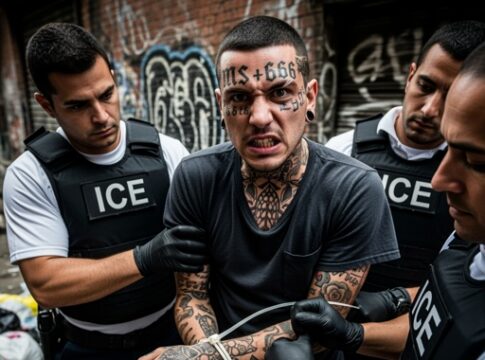
Los Angeles paid a man nicknamed “Diablo” to help keep the peace in MacArthur Park—until federal agents hauled him away as an armed, convicted killer.
Story Snapshot
- Los Angeles City Council District 1 built a taxpayer-funded “Peace Ambassadors” program as part of its official public safety agenda.
- Federal authorities then arrested one of those ambassadors near MacArthur Park as a convicted murderer and active 18th Street gang member, according to public statements.
- The city’s own website still sells the program as forward-thinking violence prevention, with no explanation of how this hire slipped through.
- The episode exposes a deeper clash between symbolic “peace” branding and basic public-safety common sense in big-city politics.
How Los Angeles Turned “Peace” Into a City Job Title
Los Angeles City Council District 1 did not just talk about reimagining public safety; it created a paid government initiative called the “Peace Ambassadors” program and tied it directly to violence prevention.[3] The district’s official page explains that Councilmember Eunisses Hernandez launched the Peace Ambassadors to prevent violence before it starts and support local residents in difficult moments, framing the project as a central piece of a softer, community-based public safety strategy.[3] On paper, that sounds idealistic but reasonable: hire local “credible messengers” to calm tensions before the bullets fly.
The term “ambassador of peace” carries real weight in global politics. The United Nations runs a “Messengers of Peace” roster populated by carefully selected public figures who lend their reputations to the institution’s goals. Peace and conflict research organizations, such as the Institute for Economics and Peace, build entire indices and training programs around the language of peace, conflict, and terrorism risk.[2] Words like “peace,” “ambassador,” and “violence prevention” do reputational heavy lifting, especially for institutions that want to showcase compassion over enforcement.
From Peace Branding To A Gang Nicknamed “Diablo”
That lofty branding crashed into reality when federal authorities arrested a taxpayer-funded Los Angeles “Peace Ambassador” near MacArthur Park and described him as an active 18th Street gang member, convicted murderer, and felon in possession of ammunition, according to federal social media statements and news outlets amplifying them. Those reports say he used the street name “Diablo,” a label that sits uneasily beside his city-funded peace title. Conservative commentators look at that pairing and see exactly what they have warned about: ideology outrunning basic vetting.
This clash is not unique to Los Angeles. The same city that hosts celebrity “Ambassadors of Peace” galas—where organizers explicitly vow not to let terrorist attacks derail feel-good events—also lives in a world where terror and violence are hard security problems, not branding issues. Internationally, democratic governments warn in blunt terms about state-sponsored terror networks that murder Americans and destabilize allies. When residents hear federal prosecutors describe a city-backed “peace” worker in the same breath as murder, gangs, and ammunition, they reasonably wonder whether their own leaders understand that difference between symbolism and security.
What We Actually Know, And What We Do Not
The public record about the Peace Ambassadors program itself is thin but clear on one point: the city’s official description casts the role as community-based violence prevention and support, not as law enforcement, surveillance, or intelligence work.[3] The site does not identify individual ambassadors by name, list their qualifications, or explain how they are selected and vetted.[3] That omission matters. Without those basic details, outside observers cannot independently verify who held what position, what the city knew about them, or when it knew it.
A convicted murderer who federal authorities say was working as a taxpayer-funded “Peace Ambassador” for the City of Los Angeles was arrested Friday for allegedly illegally possessing body armor near MacArthur Park. https://t.co/7F2UNdQw25 pic.twitter.com/A56kStaKUl
— KTLA (@KTLA) May 29, 2026
Critics argue that if federal authorities can publicly label a city-funded ambassador as a convicted murderer and active gang member, then either the city did not vet him or chose to ignore what it found. Supporters of the council office might answer that hiring people with criminal histories is part of the “credible messenger” model, and that redemption requires giving former offenders real jobs. Both sides talk past each other when the city provides almost no transparent documentation of hiring standards, background checks, or risk assessments for positions working directly in high-crime areas.
Why This Hits A Nerve About Public Safety And Common Sense
This episode taps into a broader pattern: symbolic public-safety appointments become battlegrounds for trust in government when officials hide the basics behind slogan-heavy websites.[2] On one side, progressive politicians showcase “reimagined” safety programs that prioritize restorative language and second chances. On the other, many residents—especially older, taxpaying homeowners—judge results by whether parks, buses, and sidewalks feel safer. When a “peace” worker turns out, according to federal authorities, to be a killer with gang ties, that gap between rhetoric and lived reality becomes impossible to ignore.
From a conservative, common-sense perspective, no city should place someone with an active violent record and gang affiliation into a government-funded peace role without rock-solid proof that he has fully broken from that life and gone years without serious offenses. A community may support redemption; it does not owe anyone a security-adjacent public job. The burden lies with the government: show the vetting, show the safeguards, and show the performance data—or stop asking residents to gamble their safety on ideological experiments masquerading as peace.
Sources:
[2] Web – Security Council lifts terror-related sanctions on Syrian President
[3] Web – Institute for Economics & Peace | Experts in Peace, Conflict and …
Sounds like another product of the DEI System!!!!!!!!