
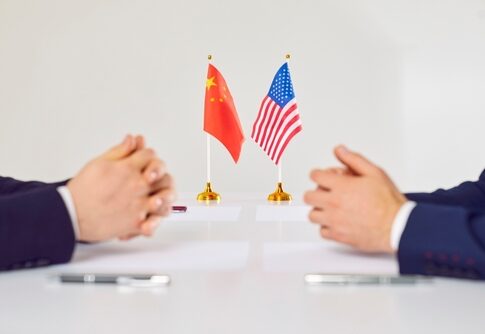
President Trump held a Latin America security summit at his own golf resort — and pointedly left out the three biggest countries in the region.
Story Snapshot
- Trump hosted the “Shield of the Americas” summit on March 7, 2026, at his Trump National Doral Miami resort, bringing together 12 governments to fight cartels.
- Brazil, Mexico, and Colombia — the three most populous countries in Latin America — were not invited, along with Venezuela, Cuba, and Nicaragua.
- The summit’s main output was a presidential proclamation creating the Americas Counter Cartel Coalition, but no funding amounts were publicly disclosed.
- Critics called the event an ideologically filtered gathering designed to build a right-wing bloc, not a serious anti-cartel strategy.
A Summit Built Around Who Was Left Out
On March 7, 2026, President Trump gathered leaders from 12 Latin American nations at his Doral, Florida, golf resort for what he called the “Shield of the Americas” summit. The goal, according to the White House, was to build a united front against drug cartels and transnational crime. But the guest list told a different story. Brazil, Mexico, and Colombia — the three largest Latin American countries by population — were all absent, along with Venezuela, Cuba, and Nicaragua.
White House Press Secretary Karoline Leavitt confirmed the 12 attending governments. Mexico was not invited. The other excluded nations were left out based on their political alignment with the left. The summit was deliberately limited to governments seen as ideologically compatible with the Trump administration’s priorities, functioning as an alternative to the long-delayed Ninth Summit of the Americas, which has been repeatedly postponed.
A Proclamation Without a Price Tag
The summit’s main concrete result was Trump signing a proclamation called the “Commitment to Countering Cartel Criminal Activity.” That document established the Americas Counter Cartel Coalition (ACCC) framework. However, no funding amounts or detailed budgets were released alongside it. Foreign Policy magazine reported that the summit produced “few policy specifics,” though it did offer signals about how Trump intends to approach the region going forward.
Supporters welcomed the summit as long-overdue recognition of the threat posed by transnational drug networks. The Center for Strategic and International Studies called it a strong opportunity for the Trump administration to advance its foreign policy pivot toward the Western Hemisphere. Secretary of State Marco Rubio and Homeland Security Secretary Kristi Noem both spoke at the event, emphasizing military cooperation and border security as top priorities.
Critics Say the Real Cartel Problem Was Not in the Room
The exclusion of Mexico, Brazil, and Colombia drew sharp criticism from analysts and nongovernmental organizations. Those three countries sit at the heart of the cartel problem — they are the largest transit and production zones for drugs entering the United States. Critics argued that building an anti-cartel coalition without them is like forming a fire brigade that skips the burning building. Several groups warned that focusing on military solutions while sidelining human rights risks empowering authoritarian-leaning leaders.
Dear Cristian Machado of the Music Band ill Niño,
Obviously the @StateDept Secretary, @SecRubio, was not listening to President @realDonaldTrump at the Shield of the Americas Summit in Florida last March 7th of 2026, when @realDonaldTrump publicly complained in front of Foreign… https://t.co/NVrAgeawnd pic.twitter.com/gf0qNQDuad
— Oliver Pichardo-Espaillat (@olisketchestoo) July 7, 2026
Colombian President Gustavo Petro, who was not invited, publicly pushed back against the summit’s framing. Analysts from the Center for Economic and Policy Research described the event as a “show” reflecting a long-standing U.S. strategy to undermine left-leaning governments and build a pro-U.S. right-wing bloc in the region. The summit was held at a Trump-owned property, which added a perception problem — even if no financial wrongdoing has been alleged. For Americans on both sides of the political divide who already distrust government insiders and elite deal-making, that optic is hard to ignore. Whether the Americas Counter Cartel Coalition produces real results or fades into bureaucratic paperwork remains to be seen. What is already clear is that the summit raised more questions than it answered about how serious Washington is about tackling the cartel crisis.
Sources:
pjmedia.com, en.wikipedia.org, x.com, abcnews.com, facebook.com, csis.org, youtube.com, nbcmiami.com, thedialogue.org, peoplesdispatch.org, wilsoncenter.org, justsecurity.org, bhfs.com, govinfo.gov, state.gov, cr.usembassy.gov, aclu.org, cfr.org, hoover.org, peacediplomacy.org, usoas.usmission.gov, loveman.sdsu.edu, history.army.mil, 2001-2009.state.gov, congress.gov